Ready for the H2 ramp-up – Practical report from the H2CAST Etzel project
The following practical report on the joint project ‘H2CAST Etzel’ provides an overview of how the joint project partners, medium-sized companies, research institutions, the state-owned Dutch Gasunie and STORAG ETZEL are driving forward the storage project with an investment of around €50 million and what challenges still need to be overcome.

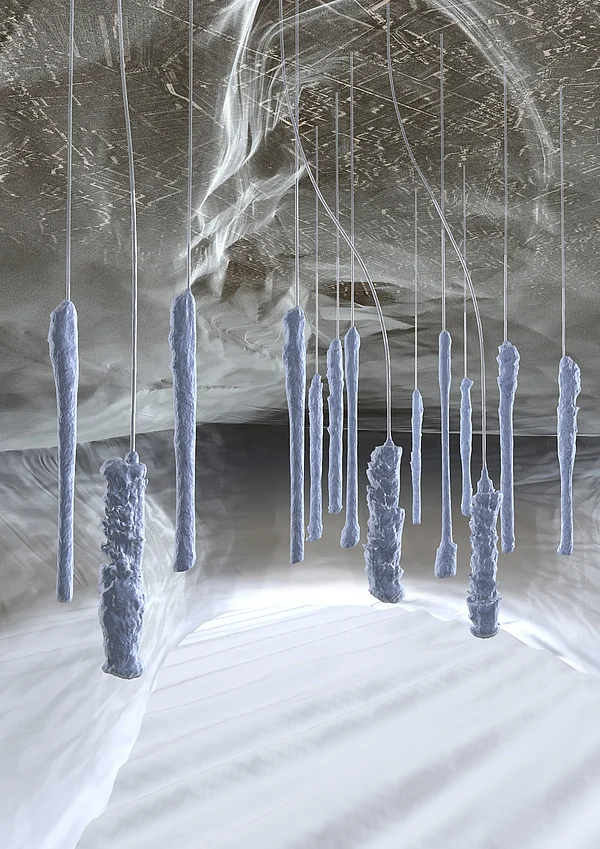
The consortium at H2CAST wants to make the Etzel site H2-ready so that it can be part of the energy infrastructure with a pipeline connection to the hydrogen core network.
Northern Germany is a leader in underground storage for natural gas and oil. Already today, a quarter of Germany's annual natural gas consumption can be stored underground. This makes Germany by far the leader in Europe. Salt caverns – cavities several hundred thousand cubic metres in size, washed out in underground salt domes at a depth of over 1,000 metres – are particularly well suited as they enable high storage and withdrawal capacities ‘on demand’ within minutes.
Approximately 100 million standard cubic metres of natural gas can be stored in a single cavern in Etzel. This corresponds to an order of magnitude of one
terawatt hour of energy or the annual consumption of approximately 80,000 households. In addition to a new building, some of the oil and natural gas storage facilities are to be converted for the storage of hydrogen for a largely decarbonised energy system. This is faster and more cost-effective than building new storage facilities.
The H2CAST project involves converting two caverns for hydrogen (H2) storage, including all the necessary requirements, design specifications and operating parameters. This work included the construction of a brine pendelum system, which can be used to flexibly adjust the H2-filled storage cavity in the cavern by changing the brine level. The project includes the connection to an above-ground test facility to be constructed for storage and retrieval, gas purification and quality monitoring of H2.
The ‘interconnection’ of two caverns enables storage test operation without the need for a pipeline connection to the storage facility. This also makes H2CAST independent of other market participants and the ramp-up of a hydrogen economy.
The announced project milestones have so far been largely achieved as planned; the two caverns have been converted to hydrogen and are currently being filled with hydrogen in the roof area.
Project report H2CAST Etzel
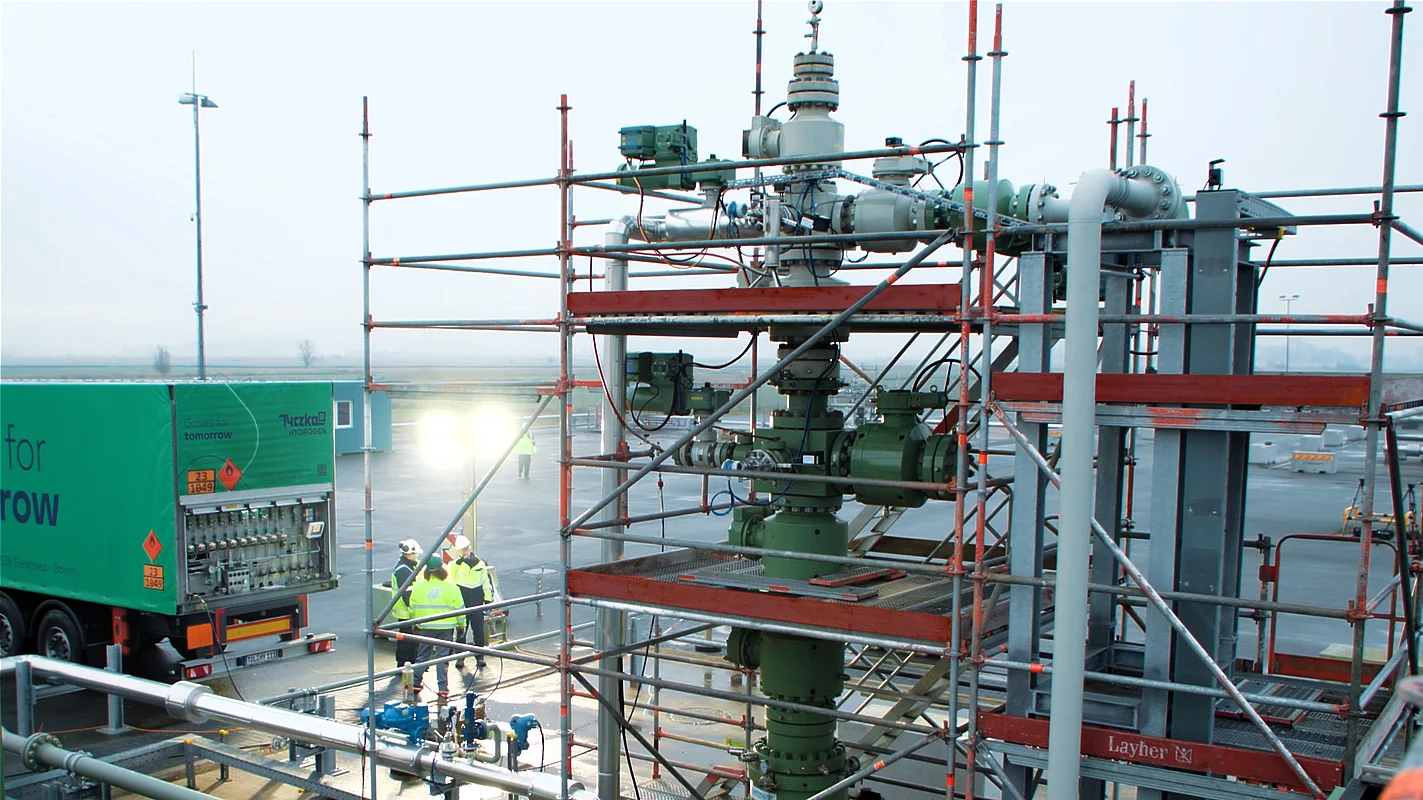
Approval status in February 2022
When the H2CAST project was launched, a mining law approval process was required. At that time, it was the first process of its kind for the conversion of caverns for H2 storage. Underground storage facilities in Germany are subject to mining law. For Lower Saxony, the State Office for Mining, Energy and Geology (LBEG) is the competent authority.
As the existing caverns already had the necessary approvals for natural gas storage operations, a preliminary review determined that H2CAST did not require an environmental impact assessment (EIA), but rather a so-called optional framework operating plan as the basis for further individual approvals. However, due to a recent change in the EVPmining regulations and interpretable legal provisions, a multi-year planning approval process with an EIA and public participation will be carried out for the future large-scale conversion of caverns at the Etzel site in order to create the necessary legal certainty for long-term investments in hydrogen storage.
Unlike facilities covered by the Energy Industry Act (EnWG), which include gas transport pipelines, hydrogen caverns are subject to accident prevention legislation (12th Federal Immission Control Ordinance, BImSchV). It must therefore be demonstrated that, in the event of a worst-case accident, i.e. failure of all safety and barrier systems in the event of an external incident, no impact areas can occur on the protected assets under consideration or that existing impact areas do not increase in size.
Thanks to the insights gained in recent years through intensive dialogue with operators, testing organisations, experts and authorities, the further development of the calculation bases and the definition of the underlying scenario framework, there is now a high degree of clarity regarding the methodology and impact areas for determining the appropriate safety distance.
For H2CAST, it has been proven that existing distances to neighbouring protected objects will not be exceeded. The results obtained in the investigations were compared with those of previous forecasts of the effects of hypothetical incidents involving the release of natural gas and compared with the results obtained. The conclusion is that the potential effects of hydrogen caverns are comparable to those of natural gas storage facilities.
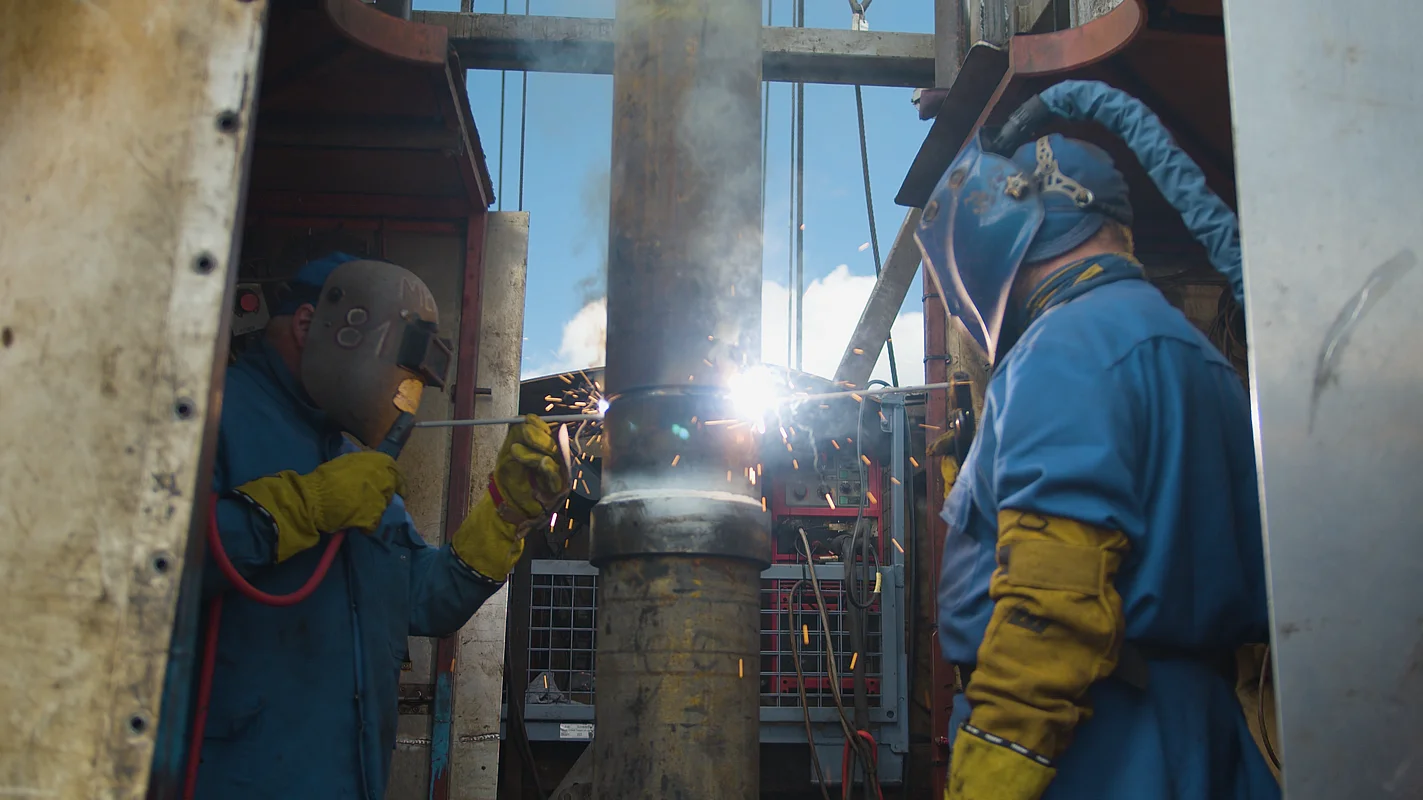
After the permits were submitted, work began in autumn 2023 on converting two existing, partially developed caverns that were originally intended for natural gas storage. Within a few weeks, following preliminary tests and planning, the so-called completions, i.e. sealing systems, delivery pipe runs, safety equipment and cavern heads, were installed or constructed.
To provide practical proof of suitability under operating conditions, components were used that had previously been installed in a natural gas cavern for several years and are now being tested for hydrogen use under operating conditions. The materials were previously tested in a test laboratory.
Challenge: Hydrogen procurement / filling process
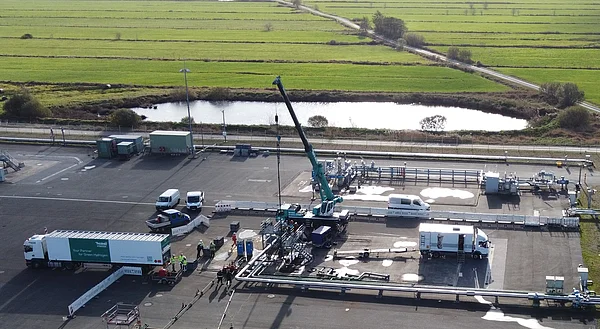
The filling of the test cavern with H2 and the corresponding procurement process for the H2CAST Etzel research project illustrate the early stage of development of the German market. A total of 89,000 kg (1,000,000 Nm³) of hydrogen was procured for the test operation and most of it has already been delivered by trailer.
In the course of storing hydrogen in the caverns filled with brine, the brine is brought to the surface from a depth of over 1,000 m through an internal pipe string and discharged via the existing pipeline system. Due to the hydrostatic counterpressure of the brine (difference in density between brine and hydrogen), the hydrogen pressure required for the initial filling is approximately 130 bar, which meant that the hydrogen trailers could not be completely emptied and a delivery pressure as high as possible was required. At the start of filling in 2023, high-pressure trailers and filling stations (> 200 bar) were only available to a very limited extent. This, together with the lack of local production – individual deliveries were made over distances of up to 1,000 km – led to a high proportion of hydrogen costs.
At the same time, the market developed very dynamically, so that an H2 producer in the immediate vicinity could be acquired during the project period and logistics costs and hydrogen production costs could be significantly reduced. Due to the different equipment standards for the trailers, it was necessary to build a transfer station that enabled the high-pressure trailers (350 bar) to be connected directly to the cavern head. In 2025, 90 per cent of the planned hydrogen volume has so far been delivered safely with up to two trailers per day. Handling on site was professional and unspectacular. The transhipment
takes two to three hours per trailer.
Despite the solutions developed here, filling caverns using tankers remains costly and limited to the project scale; thousands of trailer loads would be required to completely fill a hydrogen cavern. Less than 200 of these are sufficient to achieve the H2CAST target. This is possible because
hydrogen filling/brine storage only needs to take place in the roof area of the two caverns. The hydrogen can be transferred between the two caverns. The configuration also allows only as much brine to be extracted as is needed for the H2 working gas volume for the tests. The process is also reversible, i.e. the hydrogen in the cavern can be displaced using brine produced from other caverns. This creates a variable and scalable working gas volume for hydrogen storage.
A pipeline connection to the transport network is essential for the economic operation of an underground storage facility. Such a connection between the Etzel site and the H2 core network, which was approved in 2025, is planned. In addition, before gas storage operations can begin, it is necessary to fill the entire planned storage capacity of the cavern with hydrogen (cushion gas & working gas) so that the internal brine production line can be drained. Due to the special constellation, this is not necessary for the test operation in Etzel and will therefore take place in a later project phase.


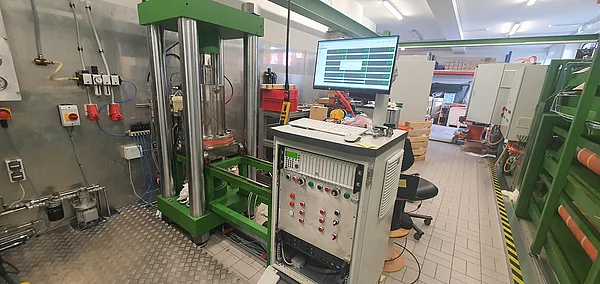
Verification of load-bearing and sealing behaviour of salt rock
At the Chair of Geomechanics and Multiphysical Systems at Clausthal University of Technology (TU), the bearing capacity and sealing behaviour of the two test caverns are being numerically simulated and investigated in the laboratory.
The focus is on the sealing of the surrounding rock salt formation and the annular cementation of the cavern access borehole against H2.
For this purpose, a novel triaxial testing facility (Fig. 4) was set up in the chair's geomechanical laboratory, which can be used to perform flow tests on cylindrical salt, cement and salt-cement composite test specimens with test gases of very small molecular or atomic diameters. Due to the even smaller atomic diameter, helium is used as the gas for the flow tests instead of H2. A particular challenge is to design the test facility, which is equipped with numerous sensors and valves, to be permanently helium-tight.
Material suitability of drilling equipment
To ensure the gas tightness of the casing-cement-salt composite, a total of four gas tightness tests were carried out using nitrogen and hydrogen, and the caverns were assessed as technically gas-tight using the same strict tightness criterion of 50 l/d as for underground storage facilities for natural gas. Part of the test was also to prove that the test medium nitrogen is suitable for H2 storage caverns.
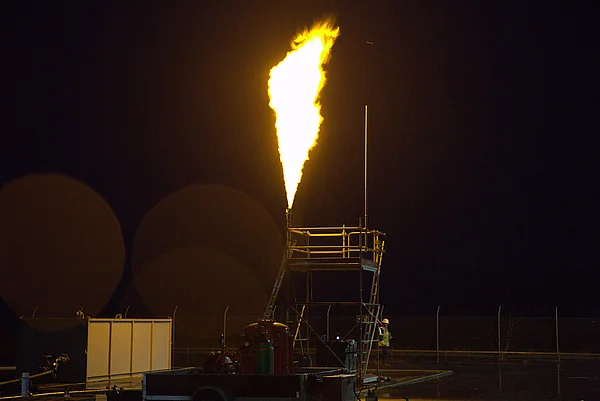
After the leak test had been completed, hydrogen was ignited and burned off in a controlled manner in the cavern during the pressure relief of the borehole for training purposes in operational procedures and to test the safety technology. The attempt to ignite the hydrogen spontaneously was unsuccessful.
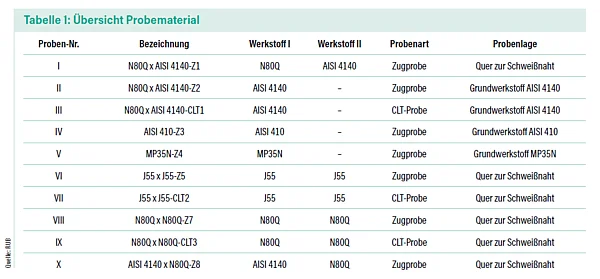
Before implementation began, investigations were carried out on relevant metallic materials used in the borehole completions under the influence of hydrogen. Samples were taken from both the base materials and weld seams with different material pairs (Table 1).The samples were loaded with pressurised hydrogen at 275 bar and 150 °C for 21 days. This was followed by hydrogen analyses and the determination of hydrogen absorption, as well as mechanical tests to quantify the influence of hydrogen loading on the mechanical characteristics. All steel materials showed no or only minor effects from hydrogen loading. Some materials exhibited a reduced yield strength when loaded. One alloy proved unsuitable for contact with hydrogen. Within the scope of H2CAST, priority was given to components of safety-relevant barrier systems.
Maintenance and testing in accordance with current integrity standards
The caverns originally developed for natural gas storage were examined with regard to their suitability for H2 storage, with particular attention paid to the storage integrity of the entire underground system.
To this end, the status quo was assessed using integrated condition monitoring and evaluation of the borehole equipment based on available documentation on geology, rock mechanics, completion, pressure testing and sol technology, as well as newly conducted measurements and tests, and ultimately the overall system integrity was determined.



H2 purification/above-ground facility
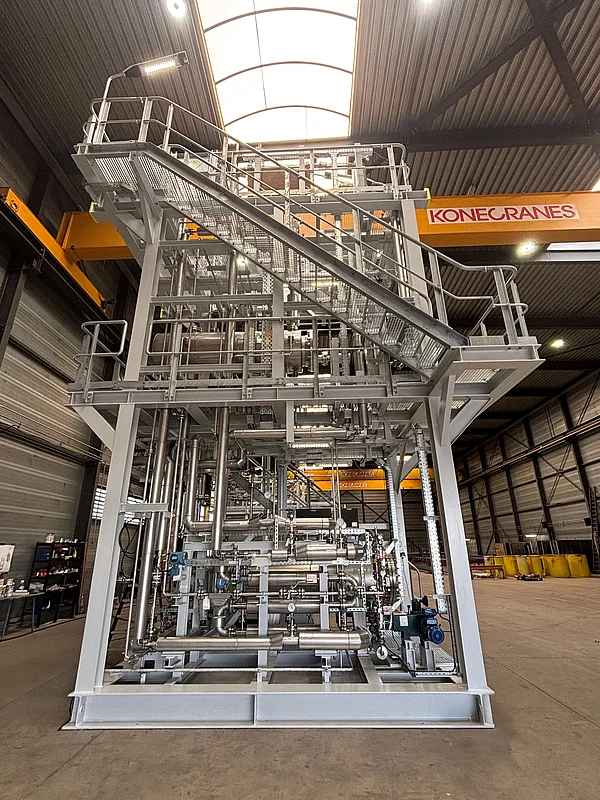
The above-ground test facility was developed by Gasunie to test the efficiency and operational safety of various technologies for removing impurities
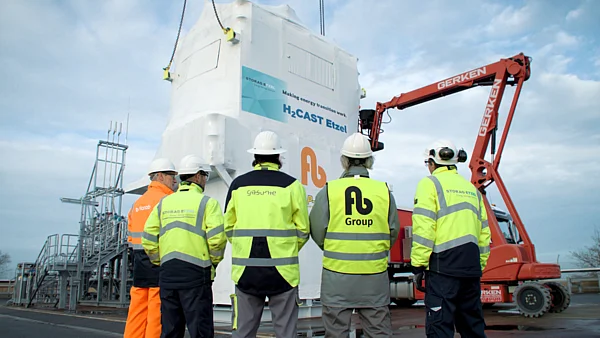
from stored gas. The main components have already been completed and delivered to Etzel at the end of December 2025. The components will be assembled in the coming weeks. Commissioning is planned for spring 2026.
The plant can pass hydrogen through activated carbon filters, temperature swing adsorption (TSA) and triethylene glycol (TEG) units, whereby process steps can be bypassed. Online measuring points after each purification stage monitor the hydrogen quality. The technologies themselves are not new, but their application in a setup with caverns previously used for crude oil is innovative.
A skid-mounted concept was chosen to allow for future alternative configurations. The ability to test multiple cleaning techniques and use them in different combinations increases the complexity of the plant. Although only a pilot plant with relatively low capacity is being used for H2CAST, it is the first H2 storage plant of its kind. Therefore, special attention was paid to safety in design and execution. The philosophy here is that pilot plants must meet the same safety requirements and standards as production plants.
Internationally recognised design codes formed the basis for the plant, and Gasunie committed itself to complying with the generally applicable DVGW standards. However, at the time of construction, there were no standards for ‘wet’ hydrogen gas, so a corrosion measurement programme was also implemented to evaluate any effects on material behaviour as a result of intensive operation under high load cycles beyond laboratory tests. The implementation of this programme provides valuable insights into material behaviour under wet H2 conditions and will further improve future plants.
Many challenges in plant design and construction have been overcome, and the knowledge gained is among the most important outcomes. This project can be seen as the next step towards realising a future energy system. Its results serve as a basis for further development and build confidence in an H2 future.

System integration of gas network/electricity grid
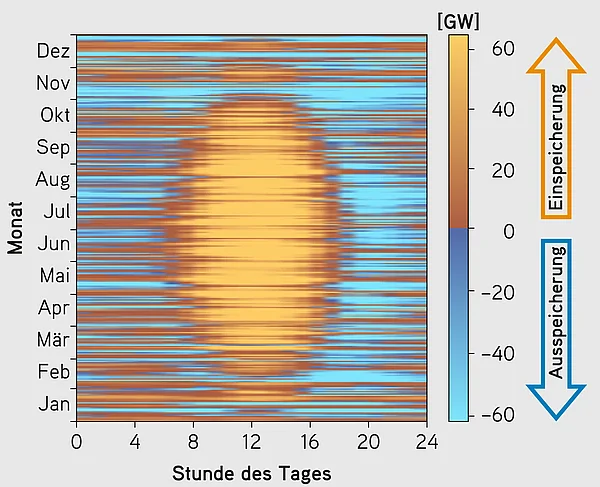
The DLR Research Centre has developed a dynamic gas network and cavern model to simulate the future network integration of H2 caverns. The facility in Etzel is used to validate the model and to test the efficiency and feasibility of simulated operating strategies in real-world conditions. At the start of the market ramp-up of the hydrogen economy, industry-driven and therefore comparatively constant H2 demand is expected,
which will develop into highly flexible use in subsequent years – both during the course of the day and seasonally.
Large-scale underground storage of H2 creates the necessary buffer in energy supply and allows for the comprehensive use of volatile renewable energies (Fig. 8). The caverns enable a balanced pressure level to be maintained in the gas network and ensure the stability of the electricity grid by supplying power stations for H2 reconversion.
They can therefore be classified as a decisive factor for the resilience of the entire electricity and gas system.
Summary

- H2CAST is a technical contribution to the underground storage of hydrogen. In recent years, valuable experience has already been gained with regard to the underground facility, i.e. the geology and suitability of the salt rock, the integrity of the boreholes, suitability and tightness of the borehole completions and the operation of the caverns filled to maximum pressure, valuable experience has already been gained in recent years, allowing the conclusion to be drawn that there is a high degree of comparability with the storage of natural gas and that the existing caverns are suitable for the storage of hydrogen.
- Particular attention is now being paid to the operation of the above-ground facilities for gas treatment, compression and gas quality monitoring, which are to be newly constructed for hydrogen.
- The approval procedures for underground hydrogen storage have largely been clarified. However, there are legal uncertainties regarding the transferability of existing approvals. Legislators are called upon to provide clarity in this regard.
- The interest shown by the public is remarkable. Intensive public relations work and transparency, as well as geopolitical developments, have led to a more objective discussion.
- The ‘real’ challenges of ramping up storage lie in the costs and the economic gap compared to other energy sources: a binding storage strategy is essential to enable storage operators to make investment decisions. The creation of a market framework and appropriate financing instruments is necessary to enable the capital market to be willing to invest. This includes, in particular, the creation of a hydrogen supply by promoting domestic production and the import of derivatives, and, of course,
the connection of storage facilities to the H2 core network. - Germany has the best conditions for underground storage.